How are Automotive Radiators Made?
If your engine is not working properly, chances are that the radiator is busted. If your local mechanic is suggesting a replacement, then it is important that you buy the radiator from an experienced automotive radiator manufacturer. But before you visit a manufacturer, it is important to know how radiators are manufactured. They are complex components but very essential to the automobile.
The following blog explains the entire manufacturing process of automotive radiators. So, keep on reading.
Modern automotive radiators are made from aluminium components because it has excellent thermal conductivity and is also lightweight. The radiator core commonly includes: aluminium tubes and fins, aluminium or plastic tanks, brazing alloys, and rubber gaskets and seals.
Tube
The manufacturing process of the aluminium tubes included precision rolling or extrusion. The tubes play a key role in the radiator core as they allow the coolant to flow through the radiator. All the cooling components are made according to the international engineering standards for safety.
Fins
The fins might be the second most important part of the radiator. They are manufactured by stamping from thin aluminium sheets. The fins play a key role in increasing the surface area and allowing the heat to dissipate faster.
Brazing Process
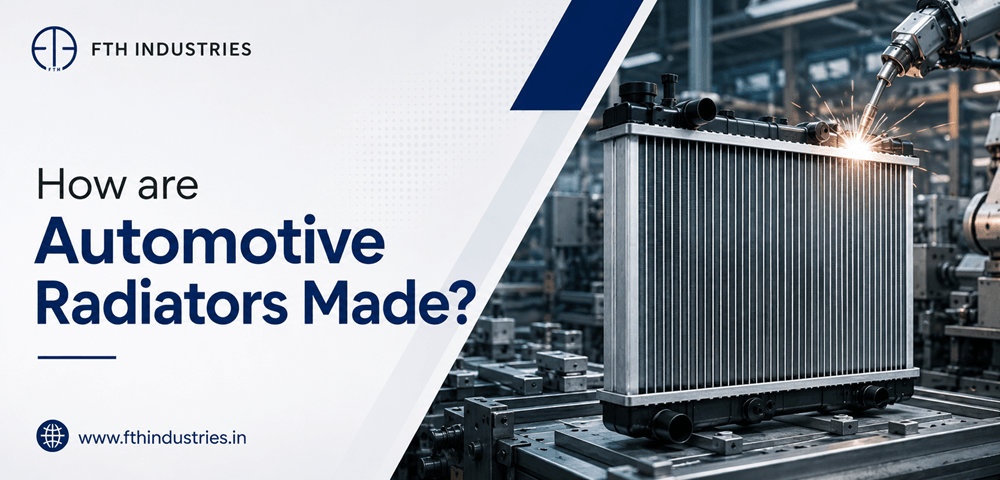
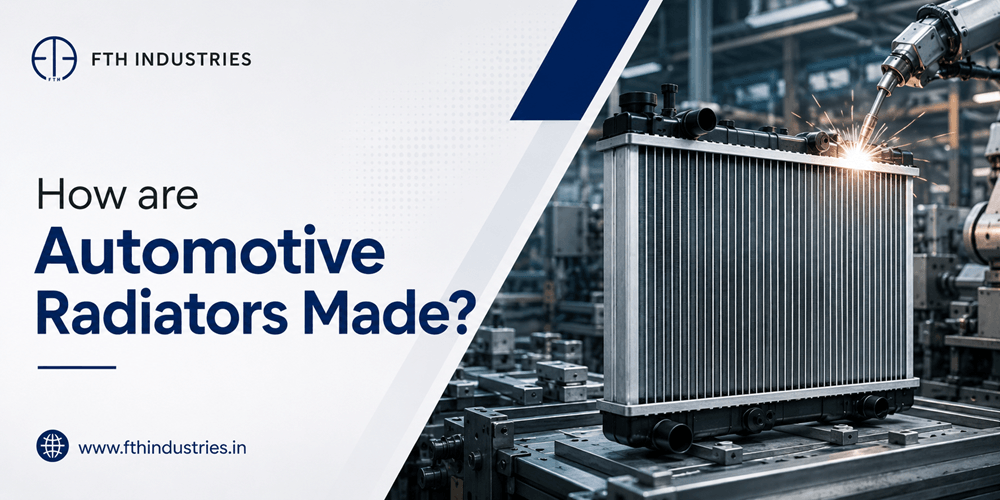
The tubes and fins are then carefully assembled to create the radiator core. Then, the radiator core is sent for brazing inside a controlled atmosphere brazing (CAB) furnace. The brazing process creates strong, leak-free bonds between the aluminium fins and tubes. The brazing process usually includes flux coating, controlled heating, and structure stabilisation.
Testing and Inspection
The radiator core undergoes thorough testing and inspection for any helium leak. They also undergo thermal cycle testing to ensure that there are absolutely zero defects in the radiator. Additionally, there is also cooling performance testing, manual inspections to ensure that welds and joints are not loose, and air leak detection.
Final Assembly
Once all the testing and inspection are successfully completed, the radiator is sent for the final assembly. Here, the plastic or aluminium tanks are installed, side plates are welded, mounting brackets are attached, and the necessary labeling and packaging are done.
Conclusion
As you can see, the radiator manufacturing process is a complex one that needs to be monitored carefully at every stage. Choosing a reliable radiator manufacturer in Ahmedabad, like FTH Industries, is crucial because it will guarantee a high-quality and reliable radiator that will last for a long time.
Related posts